
Who is the best footballer in the world? Lionel Messi vs Cristiano Ronaldo – a test that reveals which football DNA is coded in you
Football is a mirror. It reflects not just goals and trophies, but our inner code: what we consider true mastery, how we perceive success, and the path we take to greatness. For two decades, two of the greatest players of our time – Lionel Messi and Cristiano Ronaldo – have proven that there are completely different ways to become the best footballer in the world.
Two Destinies, Two Paths to Glory
Lionel Messi: The Boy from Rosario Who Became a Legend
Born on June 24, 1987, in the Argentine city of Rosario, Messi showed incredible talent from childhood. But at 11, he faced a serious challenge – doctors diagnosed him with growth hormone deficiency. Fate, however, gave him a chance: scouts from Barcelona spotted the young prodigy and offered him a move to Spain.
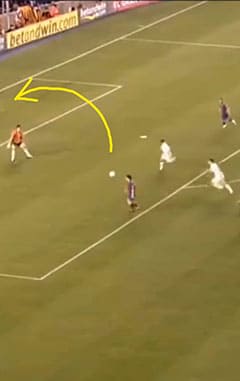
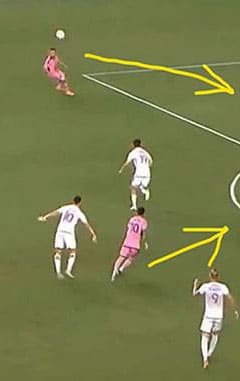
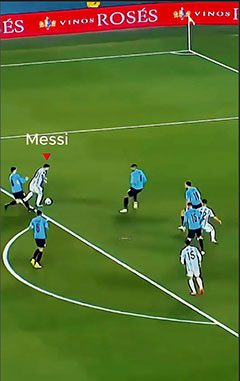
- 2004 – debut for Barcelona’s first team;
- 2009 – first Ballon d’Or and Champions League triumph;
- 2012 – 91 goals in a calendar year (world record);
- 2021 – Copa América victory with Argentina;
- 2022 – World Cup triumph in Qatar.
Lionel Messi: The Journey of "The Flea" from Rosario to Football Immortality
The Boy Who Wasn't Supposed to Become a Footballer
On June 24, 1987, in the Argentine city of Rosario, the fourth child was born to ordinary working-class parents Jorge Horacio Messi and Celia María Cuccittini—a boy destined to redefine football itself. His father worked at the Acindar steel plant, while his mother cleaned houses and worked in a magnetic coil workshop. The family lived modestly, raising not only Lionel but also two older brothers, Rodrigo and Matías, and a younger sister, María Sol.
From early childhood, Lionel displayed an incredible passion for football. By age four, he was constantly kicking a ball in the yard, and it was his maternal grandmother, Celia Cuccittini, who first recognized the future star. She would take her grandson to his older brothers' training sessions at the local club Grandoli and convinced coach Salvador Aparicio to let the boy join the team—even though he was two years younger than the other players and noticeably smaller. To this day, Messi dedicates every goal to his grandmother by pointing both index fingers to the sky—a gesture that has become his trademark and a tribute to the woman who first believed in his talent.
At seven, Messi joined the youth academy of Newell's Old Boys, where his footballing gift blossomed fully. In his very first game for the team nicknamed La Máquina del '87 (all players were born in 1987), the young forward scored four goals. Over six years at Newell's, Messi netted more than 500 goals, and during the 1999 season, his team won 45 matches and earned the nickname "The Invincibles." It was then that his slender build earned him the nicknames El Enano ("The Dwarf") and El Pulga ("The Flea").
However, at age eleven, fate nearly ended the young prodigy's football career before it began. Doctors diagnosed Messi with growth hormone deficiency—a rare condition that slows bone development and makes serious physical activity difficult. The boy stood just 127 centimeters tall. Treatment required monthly injections costing around $900—an impossible sum for a working-class family. The insurance company of Messi's father and the plant where he worked agreed to cover the costs, and Newell's Old Boys management promised assistance but provided only 400 pesos. When Argentina's economy collapsed, funding for the treatment dried up, forcing Messi's parents to search for a club willing to take on their son's medical expenses.
The Napkin That Changed Football History
In September 2000, thanks to agents Horacio Gaggioli and Josep Maria Minguella, thirteen-year-old Lionel and his father traveled to Barcelona for a trial. What they witnessed at the very first training session stunned even the most seasoned scouts. Academy players later recalled: "We saw how small and skinny he was and thought we'd just eat him alive." But one training session was enough to convince the club's sporting director, Carles Rexach, of the Argentine's phenomenal talent.
Negotiations dragged on, however—Barcelona's management hesitated to sign a thirteen-year-old foreigner and cover his expensive treatment. Jorge Messi's patience ran out, and he threatened to take his son back to Argentina. That's when Rexach, fearing the loss of a unique player, made perhaps the most famous gesture in football transfer history. On December 14, 2000, at a tennis club café, he grabbed a napkin and hastily scribbled a preliminary agreement to sign the boy. That napkin became a symbol of faith in Messi's talent and, years later, sold at auction for over $900,000.
In March 2001, the contract was officially signed. Barcelona not only welcomed the young Argentine into their famed La Masia academy but also covered all expenses for his growth hormone treatment. Lionel's father was given a position within the club's youth system, allowing the family to settle in Spain.
Initially, Messi couldn't play in official matches due to bureaucratic hurdles related to his foreign citizenship. His debut for the youth team came on April 7, 2001, in an away match against Amposta, where he immediately scored. A week later, in a game against Tortosa, Messi suffered a fractured fibula, but after recovering, he continued scoring prolifically. In the 2002/03 season, he became top scorer with 36 goals in 30 games. Overall, for Barcelona's youth teams, the Argentine scored 89 goals in 97 official matches.
The Rise of the King of Catalonia
On November 16, 2003, in a friendly against Porto, Barcelona's head coach Frank Rijkaard brought sixteen-year-old Messi on as a substitute in the 71st minute, replacing Fernando Navarro. Thus began the Argentine's unofficial debut with the first team. A year later, on October 16, 2004, in the Catalan derby against Espanyol, Messi first took the field in an official La Liga match, coming on for Deco in the 82nd minute. He was 17 years, 3 months, and 22 days old—becoming the youngest player in club history to debut in the Spanish championship.
Messi scored his first goal for Barcelona on May 1, 2005, against Albacete, appearing on the field just two minutes before the end of regulation time. At 17 years, 10 months, and 7 days, he became the youngest goalscorer in La Liga history (a record later broken). That same year, Messi obtained Spanish citizenship, allowing him to play for the club without occupying a foreign player slot.
The 2005/06 season brought the first major success—Barcelona won the Champions League, and Messi, despite his youth, was already an important part of the team. In 2008, following Ronaldinho's departure, the Argentine received the iconic number ten shirt, under which he would make history.
The golden era of Barcelona arrived with Pep Guardiola's appointment as manager in 2008. The team played an unmistakable style of "tiki-taka," based on total ball control and endless passing, with Messi as the central figure of this philosophy. The 2008/09 season brought the first treble in Spanish football history—victory in La Liga, the Copa del Rey, and the Champions League. Messi scored 38 goals in 51 matches and received his first Ballon d'Or, finishing ahead of Cristiano Ronaldo by a record margin.
The peak of Messi's individual dominance came in 2012, which entered history as "the year of Messi." Over twelve months, he scored 91 goals for club and country, breaking Gerd Müller's legendary record that had stood for forty years. In the 2011/12 season, he netted 50 goals in the Spanish championship and 73 across all competitions—an achievement that seemed impossible. In March 2012, at age 24, Messi scored his 233rd goal for Barcelona in La Liga, becoming the club's all-time leading scorer in the championship.
Over seventeen seasons wearing the Barcelona shirt, Messi played 778 official matches and scored 672 goals—an absolute club record. He won 35 trophies with the Catalans: 10 La Liga titles, 7 Copa del Rey trophies, 4 Champions League victories, 3 UEFA Super Cups, and 3 Club World Cups. His individual awards number in the dozens, including a record six Ballon d'Or trophies received during his time at Barça.
The Defining Rivalry of an Era
The unspoken rivalry between Lionel Messi and Cristiano Ronaldo became one of the most compelling narratives in football history. The peak of their competition occurred between 2009 and 2018, when the Portuguese played for Real Madrid and the Argentine for Barcelona. Each year, they alternated claiming the Ballon d'Or, sparking debates worldwide over who was superior. Statistically, Ronaldo leads Messi in total goals, yet the Argentine surpasses the Portuguese in creative metrics and efficiency per minute played. Both players have acknowledged that their rivalry pushed them to improve. As commentator Stanislav Rynkevich noted, "the best Ronaldo will always be worse than the best Messi, but the average Ronaldo will always be better than the average Messi."
The National Team Saga: From Heartbreak to Triumph
Messi debuted for the Argentine national team on August 17, 2005, in a match against Hungary. The debut was nightmarish—the eighteen-year-old came on as a substitute and was sent off a minute later for elbowing an opponent. However, in 2005, he won the U-20 World Cup, receiving the tournament's Golden Ball and Golden Boot.
In 2006, Messi went to his first World Cup in Germany, but coach José Pékerman didn't give him complete freedom, starting him only once. In 2008, in Beijing, the Argentine won Olympic gold—his first major trophy with the senior national team.
The following years, however, became a true ordeal for Messi and all of Argentina. Three consecutive finals—the 2014 World Cup in Brazil (lost to Germany 1–0 in extra time) and two Copa América finals in 2015 and 2016 (both lost to Chile on penalties)—ended in heartbreaking defeats. After the third final loss, an emotionally devastated Messi announced his retirement from international football, only to return a week later under public pressure and love for his homeland.
The long-awaited breakthrough came in 2021. At the legendary Maracanã stadium in the Copa América final, Argentina defeated Brazil 1–0 to claim their first major trophy in twenty-eight years. Messi was named the tournament's best player and top scorer. A year later came victory in the Finalissima against Italy.
The culmination of Messi's national team career was the 2022 World Cup in Qatar. Argentina delivered a phenomenal tournament, and the final against France produced one of the greatest matches in football history—3–3 after extra time, followed by a penalty shootout victory. Messi scored twice in the final, received the tournament's Golden Ball (becoming the first player in history to win the award twice), and finally lifted the coveted World Cup trophy. In 2024, the Argentine added a second Copa América to his collection, cementing his legacy as the greatest player in national team history.
Paris and a New Adventure in Miami
In August 2021, Barcelona announced that they could not renew Messi's contract due to La Liga's financial restrictions. For fans and the player himself, it was a shock. The Argentine signed a two-year deal with Paris Saint-Germain, reuniting with Neymar and playing alongside Kylian Mbappé in attack. The first season in France was an adaptation period, but in the second, Messi rediscovered his form, contributing 32 goals and 35 assists in 75 matches and winning Ligue 1 twice.
In the summer of 2023, Messi made an unexpected decision—to move to Inter Miami in the United States. This transfer transformed not only the club but the entire MLS: stadiums filled to capacity, ticket prices soared, and David Beckham, the club's co-owner, couldn't hide his tears of joy. Messi's debut was Hollywood-worthy—in a Leagues Cup match against Cruz Azul, he came on as a substitute and scored the winning goal in the 94th minute from a free kick. Inter Miami won the first trophy in club history, and soon Messi was joined by former Barcelona teammates Sergio Busquets, Jordi Alba, and Luis Suárez, recreating their Catalan chemistry on American soil.
In 2024, Messi was named MLS Most Valuable Player, and in 2025, he led Inter Miami to the first championship in club history, scoring 29 goals and winning MVP for the second consecutive time.
Personal Life and Human Qualities
Unlike many football stars, Messi has always maintained a modest and private lifestyle. His chosen partner is Antonela Roccuzzo, whom he met when they were both five years old in their native Rosario. Antonela's cousin, Lucas Scaglia, was Lionel's best friend. Their relationship began in 2008, but the couple officially married only in 2017, at one of Rosario's most luxurious hotels in the presence of 260 guests, including Xavi, Carles Puyol, and Shakira. More than 200 security personnel guarded the wedding—the groom's father called it "the most important match of his life."
The couple has three sons: Thiago (born 2012), Mateo (born 2015), and Ciro (born 2018). Messi speaks warmly of his children: "Thiago, even though he's only seven, is very mature and smart. A true gentleman. And Ciro is like Mateo."
Despite his image as a devoted family man, in 2016, Messi and his father found themselves at the center of a tax scandal. They were accused of evading €4.2 million in taxes on advertising income through offshore companies. The court sentenced both to 21 months in prison (suspended, as Spain does not imprison first-time offenders for sentences under two years) and imposed substantial fines: €2 million for Messi and €1.5 million for his father.
In 2007, Messi founded his own charitable foundation, which focuses on helping children access education and healthcare. The footballer also collaborates with UNICEF.
In 2025, U.S. President Joe Biden awarded Messi the Presidential Medal of Freedom—the highest civilian honor in the United States.
Today, at 38 years old, Lionel Messi continues to score and inspire while playing for Inter Miami. With over 860 career goals, he ranks second on the all-time scorers list. An eight-time Ballon d'Or winner, World Cup and Copa América champion, four-time Champions League winner, and ten-time Spanish champion—the list could go on endlessly. But the most remarkable part of his story is that the little boy from Rosario, whom doctors predicted would never have a career due to illness, not only survived but conquered the entire world, forever etching his name into football history.
Lionel Messi: The Quiet Force of Good — How "The Flea" Changes the World Away from the Football Pitch
Introduction: The Humble Genius with a Big Heart
When people talk about Lionel Messi, the first things that come to mind are his magical left foot, his dribbling through defenses, and his record number of Ballon d'Or trophies. The Argentine is known for his reserve and even shyness off the field. Unlike his main rival Cristiano Ronaldo, who loudly publicizes his charitable actions, Messi prefers to operate quietly. However, this does not mean his contribution to helping those in need is any less significant. On the contrary, Lionel Messi's charity work is a vast, systematic effort that deserves separate attention and recognition.
The Leo Messi Foundation: The Main Instrument of Aid
In 2007, when Messi had already established himself as a global superstar, he founded his own charitable organization — the Fundación Leo Messi. The foundation's goal is simple and noble: to help children in difficult life situations and provide them with access to education and healthcare. Through the foundation, the Argentine's largest projects are carried out around the world — from Argentina and Spain to the Middle East.
Medicine: Saving Children's Lives
Perhaps the most prominent and large-scale area of Messi's charitable work is financing medical institutions, especially pediatric oncology centers.
The Pediatric Cancer Center in Barcelona
The crown jewel of Messi's charitable career is his involvement in creating the specialized SJD (Sant Joan de Déu) pediatric cancer center in Barcelona. The project required a colossal investment — around €30 million. Messi personally joined the fundraising campaign, and when the amount was nearly raised, he covered the remainder out of his own pocket, donating approximately €2.6 to €3 million. He personally attended the cornerstone-laying ceremony and, in 2022, visited the completed hospital. His contribution was so significant that the Catalan government awarded him the Creu de Sant Jordi (Saint George's Cross) — one of the region's highest honors.
His Hometown Rosario: Helping from Childhood
Messi never forgets the city where he grew up. In 2013, he donated around €600,000–650,000 to renovate the oncology department at the children's hospital in Rosario. Part of the funds also went toward internships for local doctors in Barcelona, helping to improve the qualifications of medical professionals in his homeland. In January 2025, Messi once again demonstrated his love for Rosario by allocating €152,000 to restore a sports complex in a disadvantaged neighborhood of the city.
The COVID-19 Pandemic
When the world faced the coronavirus pandemic, Messi did not stand idly by. In 2020, he donated around €1 million to a hospital in Barcelona and clinics in his native Argentina. Additionally, he sent 50 ventilators to Rosario to help doctors cope with the influx of critically ill patients.
Education: Investing in the Future
Messi firmly believes that education is the key to a better life for children.
Projects Around the World
The Messi Foundation implements numerous educational initiatives. These include supporting a school breakfast program in the Gaza Strip, providing educational kits for children from Syria, and renovating schools in Argentina. It is important to note that many myths surround this topic. Information has spread actively online claiming that Messi built nearly 10,000 schools worldwide and supports 40 million children. Fact-checkers have investigated these claims and debunked them: while Messi does help schools, the scale of his activities is significantly more modest and realistic.
UNICEF Goodwill Ambassador
Since 2010, Lionel Messi has served as a UNICEF Goodwill Ambassador. In this role, he participates in global campaigns to protect children's rights and draws attention to issues of education and health. Unlike the myth about UNESCO funding (which is false, as UNESCO is funded by member states), Messi's collaboration with UNICEF is a genuine and important part of his public work.
Charity Matches and Legal Compensation
Another way Messi raises funds for good causes is through friendly matches featuring stars. For example, in 2013, a "Messi and Friends" match against a team of All-Stars was held in Colombia, with all proceeds going to charity.
Messi's principled stance on matters of honor and reputation deserves special attention. After the 2014 World Cup final, the Argentine newspaper La Razon published a defamatory article accusing the footballer of doping and wearing a wig. Messi sued and won the case. The compensation awarded, amounting to over €70,000, he donated in full to the international organization Médecins Sans Frontières (Doctors Without Borders), which provides medical aid to victims of conflicts and disasters.
Fighting False Allegations
Unfortunately, even charitable work does not always protect against attacks. In 2018, a former employee of the Messi Foundation accused the organization of embezzlement and funneling money to offshore accounts. These allegations could have seriously damaged the footballer's reputation. However, Messi did not settle the matter quietly; he went to court and in 2020 won the case completely, proving that his foundation operates honestly and transparently.
Recognition of Merits
Good deeds do not go unnoticed. In 2020, the publication SPORT awarded Messi the Values Award for his contribution to charity and the promotion of universal human values. And the award from the Catalan government — the Creu de Sant Jordi — became official recognition of his service to the region where he spent most of his career.
Conclusion: The Quiet Hero of Millions of Children
Lionel Messi does not need loud headlines about his generosity. His style is about concrete actions and real help. Hundreds of thousands of euros donated to children's medical treatment, dozens of ventilators sent to hospitals, renovated schools, and built cancer centers — all of this creates a legacy that cannot be measured in goals and trophies.
Paradoxically, the shyest genius in world football possesses one of the biggest hearts. His charity knows no borders: from Catalonia's Barcelona to Argentina's Rosario, from Palestine's Gaza to Syrian refugee camps. And although exaggerated myths about his activities sometimes appear on social media, the real facts speak for themselves: Lionel Messi is not only the greatest footballer in history but also a man who uses his success to make the world a better place for those who need it most.
Messi spent 17 seasons at Barcelona, becoming the club’s icon, before playing for PSG and Inter Miami. His style is defined by dribbling magic, visionary passes, and ice-cold precision in the box.
Cristiano Ronaldo: From Street Football to Global Stardom
Born on February 5, 1985, on the Portuguese island of Madeira, Ronaldo grew up in poverty, kicking a ball on dusty streets. At 12, he moved to Lisbon to join Sporting CP’s academy.
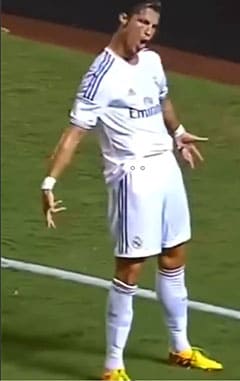
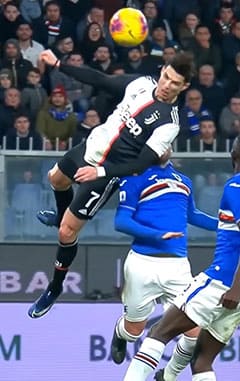
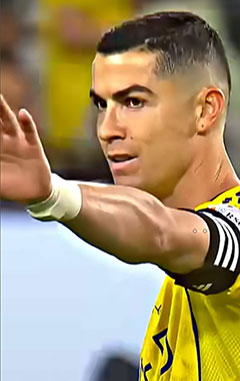
- 2003 – transfer to Manchester United, where he became a star under Ferguson;
- 2008 – first Ballon d’Or and Champions League win;
- 2009 – record €94M move to Real Madrid;
- 2016 – Euro triumph with Portugal;
- 2018 – transfer to Juventus, then returns to Manchester United and later joins Al-Nassr.
Cristiano Ronaldo: The Journey of Madeira's "Bee" to the Title of the Greatest
The Name a President Gave Him
On February 5, 1985, in the modest home of gardener José Dinis Aveiro and cook Maria Dolores dos Santos, their fourth child was born - a boy destined to become one of the most recognizable faces on the planet. Maria Dolores has openly admitted that poverty and her husband's struggles with alcoholism led her to consider abortion, but fate had other plans. The baby received the double name Cristiano Ronaldo. While his aunt suggested the first name, his father - a devoted admirer of actor and U.S. President Ronald Reagan—provided the second.
The future champion's childhood unfolded in a humble house on the island of Madeira. From his earliest years, he displayed an extraordinary passion for football. He could spend hours playing with a single ball, often barefoot, on the dusty streets of Funchal. By age eight, Cristiano had joined the local amateur club "Andorinha," where his father worked part-time as the kit man. His tireless work ethic and refusal to leave the pitch after training earned him the nickname "Abelhinha" (Little Bee). His talent was quickly noticed by larger clubs on the archipelago, and he soon moved to "Nacional," where his goalscoring abilities flourished like never before.
Lisbon, Life Lessons, and Heart Surgery
At twelve, Ronaldo faced his first serious life-changing moment. Scouts from Lisbon's "Sporting" were so impressed by the boy's performance that they didn't hesitate to write a check for roughly £1,500—a paltry sum compared to what lay ahead. The young islander set off to conquer the capital. His early days at Sporting's Academy were brutal. Fellow youngsters mocked his thick provincial accent; he was homesick and, after throwing a chair at a teacher, was expelled from school.
But the real test came at fifteen. Doctors diagnosed Cristiano with tachycardia—a condition that could have permanently ended his sporting career. An urgent heart operation was scheduled. Ronaldo went under the laser scalpel and, defying all predictions, left the hospital just days later and headed straight to training. This ordeal forged his character and taught him one thing: he would fight to the end.
His dedication and talent paid off. Ronaldo became the first player in the club's history to represent every age group—from the U16s to the first team—in a single season. His senior debut for Sporting arrived in 2002 when the 17-year-old prodigy scored a brace against Moreirense.
The Birth of a Superstar at Manchester United
In the summer of 2003, Sporting hosted Manchester United for a friendly match to inaugurate their new stadium. The 18-year-old Ronaldo tormented United's defense, and his team thrashed the Premier League giants 3–1. Back in the dressing room, United's players practically begged Sir Alex Ferguson to sign the skinny Portuguese kid. Ferguson didn't hesitate. Within days, a deal worth £12.24 million was finalized. For an 18-year-old, it was a record transfer fee in English football history.
At Manchester, Ronaldo inherited the legendary number seven shirt, previously worn by Best, Cantona, and Beckham. It was both an incredible vote of confidence and immense pressure. In his first few seasons, Cristiano displayed dazzling but often inefficient football, overindulging in step-overs. Ferguson became his "football father," patiently teaching him pragmatism and composure.
The 2006/07 season marked a turning point. Ronaldo transformed from a promising winger into a ruthless penalty-box finisher. The following season (2007/08), he reached the pinnacle of the football world: 42 goals, a Premier League title, and Champions League glory. The crowning moment came with the Ballon d'Or and the FIFA World Player of the Year award—the first such accolades for a Portuguese player since Eusébio.
The King of Madrid: Galácticos and the CR7 Era
In 2009, Real Madrid, in the midst of building their second Galácticos era, paid £80 million (€94 million) for Ronaldo, making him the most expensive footballer in history at the time. His presentation at the Santiago Bernabéu drew 80,000 fans—more than the population of his hometown, Funchal.
Wearing the famous white shirt, the Portuguese spent nine unforgettable years, becoming the club's all-time leading scorer with 450 goals. It was in Spain that the CR7 persona fully emerged—a goal-scoring machine combining incredible physical power, leaping ability, and sublime technique. With Real Madrid, he won the Champions League four times (including three consecutive titles from 2016 to 2018), claimed two La Liga titles, and added four more Ballon d'Or trophies. His rivalry with Barcelona's Lionel Messi divided the football world and elevated interest in La Liga to unprecedented heights.
The Italian Challenge and the Homecoming
In 2018, feeling he had accomplished everything in Madrid, Ronaldo embraced a new challenge: Juventus paid €100 million for the 33-year-old forward—a record for the Italian club and for a player of that age. In Turin, Cristiano continued rewriting records, won two Serie A titles, the Coppa Italia, and became the first player ever to win league titles in England, Spain, and Italy. However, his primary objective—winning the Champions League with Juventus—remained unfulfilled.
2021 brought an emotional but complicated return to Manchester United. Fans rejoiced, but the honeymoon was short-lived. The club was in turmoil; coaching changes and philosophical shifts led to conflict. A controversial interview criticizing the club effectively ended his second spell in English football.
Saudi Arabia and Immortality in Numbers
At the end of 2022, Ronaldo signed with Saudi Arabian club Al-Nassr. His salary was reportedly the largest in sports history. Many viewed this move as the twilight of his career, yet Cristiano has continued to prove that scoring goals remains his eternal passion. He keeps finding the net regularly, and his presence has attracted dozens of other world stars to the Saudi league.
His international career with Portugal has been equally spectacular. Since his debut in 2003, he carried the weight of expectation for a team not always considered among the favorites. The defining moment arrived at Euro 2016 in France. Ronaldo's early injury in the final couldn't break his team's spirit—Portugal sensationally defeated the hosts to claim their first major trophy. The Nations League title followed later. Ronaldo holds the absolute records for most appearances for Portugal and most international goals in football history (over 200 caps and more than 130 goals).
Georgina, His Children, and "Mr. Chips"
The footballer's personal life has always been tabloid fodder. His most high-profile relationship was with Russian model Irina Shayk, lasting five years (2010–2015). Since 2016, his heart belongs to Spanish-born Georgina Rodríguez, who was working as a Gucci shop assistant before meeting the star. In August 2025, after nine years together, Cristiano proposed to Georgina.
Ronaldo has five children. His eldest son, Cristiano Jr. (born 2010), has been raised by his father from birth, with the mother's identity kept private. In 2017, twins Eva and Mateo were born via surrogacy, followed by daughter Alana Martina with Georgina. In 2022, the couple welcomed daughter Bella Esmeralda; tragically, her twin brother passed away during childbirth.
Today, at 40 years old, Cristiano Ronaldo continues to play, score, and inspire. On the eve of his milestone birthday, he declared himself the greatest footballer in history—and it's difficult to argue, looking at his numbers, his titles, and the incredible will to win he has carried his entire life, from a hungry childhood in Madeira to becoming a global sporting icon.
Cristiano Ronaldo: Philanthropy at the Level of a Goal — How a Superstar Changes Lives Off the Pitch
Introduction: Two Sides of a Legend
When it comes to Cristiano Ronaldo, most fans picture chiseled muscles, the iconic "Siu!" celebration, and hundreds of goals blasted past opposing goalkeepers. His on-field image is one of concentration, willpower, and sometimes even the arrogance necessary to reach absolute heights. However, beyond the stadium, the Portuguese forward transforms into a different person—a humble philanthropist whose charitable activities have long surpassed the mere "duty of a star." By various estimates, the total amount of his donations exceeds tens of millions of euros. Paradoxically, many of his deeds remain in the shadow of goal highlights, and only occasionally does the public learn the scale of the help CR7 provides around the world.
The Roots of Generosity: A Poor Childhood as the Foundation
Cristiano knows firsthand what poverty means. He grew up in a poor neighborhood in Funchal on the island of Madeira, the son of a gardener and a cook. It is this past that shaped his worldview. In one interview, the footballer admitted that his childhood was difficult and that he never forgot those in need of support. This internal connection with ordinary people became the driving force behind his charity. He understands what it means to be a hungry child dreaming of a new pair of shoes, and that is why his help is always targeted and concrete.
Donating Without Tattoos: A Principled Stance
One of the most surprising stories about Ronaldo involves his lack of tattoos. In the world of modern football, where an athlete's body becomes a canvas for art, the Portuguese stands out with his clean skin. The reason is not aesthetic preference but a conscious life choice: Cristiano regularly donates blood and is a bone marrow donor. Tattoos can slow down this process or make it impossible due to infection risks. This story perfectly characterizes Ronaldo: he is willing to sacrifice part of his image (after all, tattoos are a trend among footballers) for the chance to save lives. He doesn't just donate blood; he has been on the bone marrow donor registry for leukemia patients for many years.
Major Milestones of a Charitable Career
Collaboration with International Organizations
In 2013, Ronaldo became a global ambassador for Save the Children (until 2018). As part of his work, he attended charity auctions, particularly in Egypt, supporting campaigns for newborn child survival. In addition, the Portuguese works closely with UNICEF and World Vision, using his media weight to draw attention to the problems of children in conflict zones and poverty-stricken areas.
Donations to Education and Infrastructure
His help in the educational sphere deserves special attention. In 2011, Ronaldo sold his "Golden Ball" (specifically, a replica of the European Golden Shoe award) at auction for €1.5 million. All proceeds were directed toward building schools in the Gaza Strip, which had suffered from military actions.
In 2025, the CR7 Foundation launched a large-scale digital education project for children in Africa. The program involves equipping schools in the continent's poorest regions with tablets, educational software, and internet access. For Ronaldo, this is a logical continuation of his mission: "Investing in knowledge is the best way to create a better future."
Medicine and the Fight Against Cancer
Health issues are among the key focuses of Ronaldo's philanthropic activity. When his mother, Maria Dolores, was battling cancer, the family understood the importance of quality medical care. After his mother's recovery, Cristiano invested significant funds in renovating and equipping the oncology center in Madeira where she had been treated. He also financed the creation of new intensive care units in Lisbon and Porto, which played a critical role in saving patients during the COVID-19 pandemic.
Numerous cases of targeted assistance are also known. Ronaldo paid for the expensive treatment of a rare tumor for a Spanish child and also helped an infant with a severe brain pathology.
Help for Victims of Disasters and Conflicts
Support for Palestine and Syria
Ronaldo has repeatedly provided assistance to residents of the Middle East region. In 2015, he met with a five-year-old Palestinian boy, Ahmad Dawabsha, who miraculously survived after his home was set on fire by Israeli settlers. The footballer received him at Real Madrid's training ground, gave him kit, and surrounded him with warmth.
In 2023, during the escalation of the conflict in Gaza, the Portuguese transferred $2 million for food and humanitarian aid to children in the region. Previously, he had also supported Syrian refugees: recording video messages, donating funds, and calling on the international community not to forget children affected by war.
Earthquakes and Natural Disasters
When Nepal was struck by a devastating earthquake in 2015, killing thousands, Ronaldo transferred €7 million to help the victims. In 2023, he personally organized the dispatch of cargo planes with humanitarian aid (tents, food, medicine, baby supplies) for those affected by earthquakes in Turkey and Syria.
In 2024, Ronaldo did not stand aside from the disaster in his homeland—he allocated funds to rebuild homes for families affected by devastating wildfires in Portugal.
An Unprecedented Gesture: $25 Million to Fight Hunger
In November 2025, news spread around the world that made even skeptics acknowledge the scale of Ronaldo's character. The footballer donated $25 million to fight hunger in Africa and the Middle East. The funds were channeled through UNICEF, Save the Children, and World Vision structures to support populations in Sudan, Syria, Palestine, and several West African countries facing acute food crises. This amount became one of the largest private donations by an athlete in history. In his statement, Ronaldo emphasized: "No child should go to bed hungry. If my success can bring hope or relief to even one life, that means more than all the trophies I've ever won."
Donating Personal Awards and Bonuses
Cristiano systematically donates not only money but also symbolic awards. In 2013, he sold a replica of his "Golden Ball" at auction for €600,000, with proceeds going to the Make-A-Wish foundation, which grants wishes to seriously ill children. The buyer was Israeli billionaire Idan Ofer.
After winning Euro 2016, the Portuguese transferred €275,000 of his bonus money to a fund fighting childhood cancer, and a year earlier, he did the same with bonuses from winning the Champions League. In 2014, he gave $59,000 (bonuses from the Champions League victory) to charity, and directed a €100,000 fine from FIFA to the Red Cross.
Support During the Pandemic and Personal Contributions
During the COVID-19 pandemic, Ronaldo not only accepted a significant salary reduction at Juventus (around €3.8 million) to help the club weather the crisis but also financed the purchase of equipment for hospitals.
Separately, it's worth noting how the footballer treats young fans. Countless times, fans have captured on camera how Ronaldo stops to hug a child who has run onto the field or signs a ball for a sick admirer. For him, this is not work but a natural part of life.
Gratitude and Human Relationships
The Portuguese knows how to show gratitude not only abstractly but also quite concretely. In 2019, while vacationing in Greece, he left hotel staff a tip of $26,000. And for his long-time agent Jorge Mendes' wedding, he gave not a watch or a car but an entire Greek island worth millions of dollars.
Ronaldo also helped his older brother Hugo overcome alcohol addiction, paying for treatment and providing him with work at the CR7 family museum in Madeira.
Conclusion: A Legacy Bigger Than Football
Cristiano Ronaldo has long transcended the boundaries of just being a footballer. For millions of underprivileged children around the world, he is not just a poster idol but a real savior. His charity knows no nationality and no borders: he helps in Palestine, in Syria, in Nepal, and in his native Portugal. Unlike many celebrities who use charity as PR, Ronaldo often acts without unnecessary noise.
As Al Jazeera writes, the collection of these stories reveals "not only a football legend but also an exceptional individual capable of balancing sporting glory and humanity." Perhaps, years from now, when his career is over, these 25 million and more stories will become his main "Golden Ball"—a ball he scored against the goal of indifference and injustice.
Ronaldo embodies physical dominance, versatility, and an insatiable hunger for victory. He’s proven that even at 38, you can still be the best footballer in the world.
Who is Better: Messi or Ronaldo?
This debate has raged for over 15 years. Some argue Lionel Messi is a football genius, while others believe Cristiano Ronaldo epitomizes hard work and discipline.
Messi: 7 Ballon d’Or awards, 4 Champions League titles, all-time top scorer and assist provider in La Liga.
Ronaldo: 5 Ballon d’Or awards, 5 Champions League titles, all-time top scorer for national teams.
But what matters more – natural talent or relentless self-improvement?
Football is more than just a sport. It’s history, emotion, and choice. Who are you? A genius who sees the game one step ahead? Or a warrior who overcomes every obstacle?
Our test will reveal which football DNA is coded in you. You might be a Messi fan but act like Ronaldo in clutch moments. Or adore CR7’s power yet think like Leo10 on the pitch.
Try it – and uncover the truth about yourself!